

In Traditional Chinese Medicine (TCM), the body's immune defenses are understood through the concept of Wei Qi (卫气), often translated as Defensive Qi. Wei Qi circulates just beneath the body's surface, acting as a protective shield against external pathogens such as cold, wind, and harmful microorganisms. When Wei Qi is abundant and flowing freely, the body is well-equipped to resist illness; when it is depleted, recurring colds, fatigue, and slow recovery commonly follow. TCM practitioners approach Chinese medicine for immunity boost not by suppressing symptoms, but by strengthening the body's own protective capacity from within — a fundamentally different philosophy from conventional medicine.
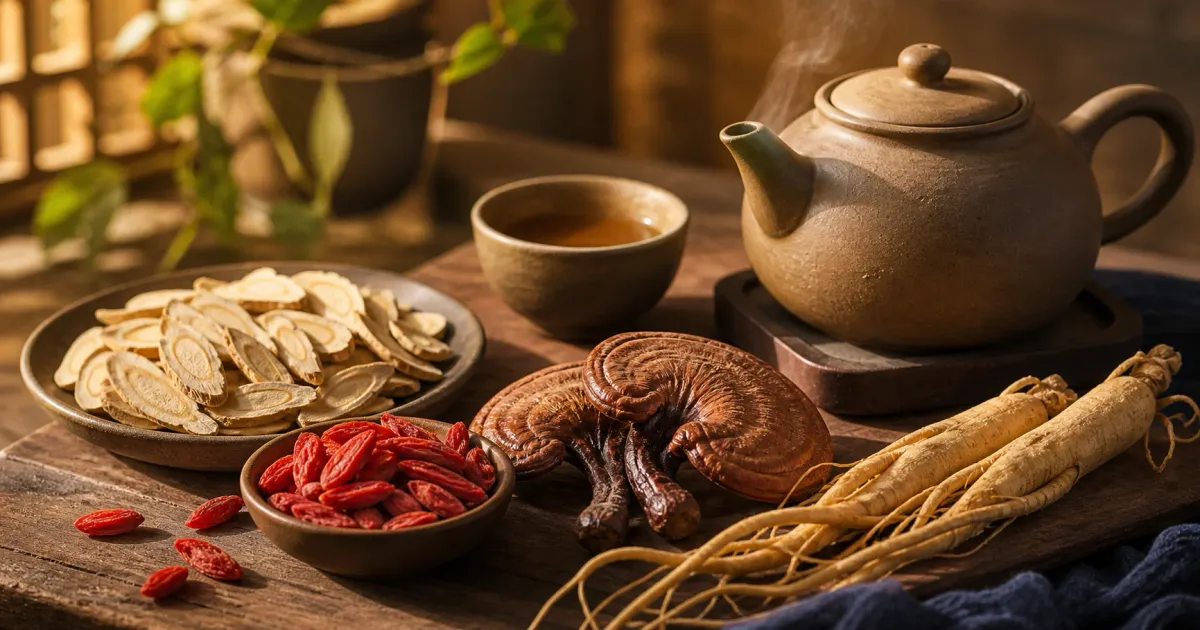
Among the most celebrated TCM herbs for immunity is Huang Qi (黄芪), known in the West as Astragalus, with over 2,000 years of documented use. It supports the Lung and Spleen organ systems, which in TCM are responsible for producing and distributing Wei Qi throughout the body. The classic formula Yu Ping Feng San (玉屏風散 / Jade Windscreen Formula), built around Huang Qi, has been used for centuries to help reduce susceptibility to recurrent colds and respiratory infections. Ling Zhi (灵芝 / Reishi mushroom) is another highly regarded herb whose polysaccharide compounds may help modulate cytokine activity and support overall immune tone. Experienced TCM physicians carefully select and combine these herbs based on each individual's constitution and current health condition rather than applying a single formula to all patients.
Beyond herbal medicine, Therapeutic Acupuncture and Moxibustion are two key TCM treatments that may help support immune function. Research published in peer-reviewed journals suggests that acupuncture may help regulate both innate and adaptive immune responses, and some studies indicate it may support T-cell production in the body. Moxibustion, which applies gentle heat from burning dried mugwort (艾葉) at specific acupuncture points, has been studied for its potential to stimulate white blood cell activity and promote overall immune resilience. Many patients report feeling more energetic and experiencing fewer seasonal illnesses after a consistent course of these treatments at our clinic, though individual responses naturally vary.
From a TCM perspective, lasting immune health depends as much on daily habits as on clinical treatment. Eating in alignment with the seasons is a foundational principle — warming, nourishing foods are recommended in cooler months, while lighter, cooling foods are favored in summer. Prioritizing sleep before midnight is considered essential, as this is when the body's restorative Qi activity is at its peak. Regular, moderate exercise and effective stress management are also important, as chronic stress is understood in TCM to scatter Qi and weaken the body's defensive systems over time. Experienced TCM physicians often provide personalized dietary and lifestyle guidance alongside treatment to help each patient build a stronger foundation for long-term wellbeing.
At Hua Yi Tang Clinic, our experienced TCM physicians begin each consultation with Pulse Diagnosis (脈診) to assess the state of your Wei Qi and overall energy balance. From this individualized assessment, a personalized treatment plan is developed, which may include Therapeutic Acupuncture, Moxibustion, and Herbal Compress therapy to comprehensively support immune function. Many of our patients report noticeable improvements in energy levels and general resilience after completing their recommended treatment course. If you are interested in exploring Chinese medicine for immunity support in Bangkok, we warmly invite you to consult with our team at either our Saint Louis or Suksawat branch.