

Trigger finger occurs when a flexor tendon does not glide smoothly through its tendon sheath. Early symptoms may include pain or tenderness at the base of a finger, followed by clicking or catching during movement. Some people need the other hand to straighten the finger, while severe cases may remain locked. Associated risk factors can include repeated gripping, diabetes, and certain inflammatory joint conditions.
Conventional assessment usually considers the symptom history, location of tenderness, locking pattern, and finger movement. Ultrasound may be considered when the diagnosis is uncertain or another condition is suspected. Depending on severity, underlying health, and clinical judgment, management may include activity modification, splinting, medication, injection, or a medical procedure.
A Traditional Chinese Medicine assessment is individualized and may consider symptom duration, pain and stiffness patterns, hand use, general health, and findings from tongue and pulse examination. The resulting acupuncture plan may therefore differ between patients. This assessment should complement rather than replace an appropriate medical diagnosis.
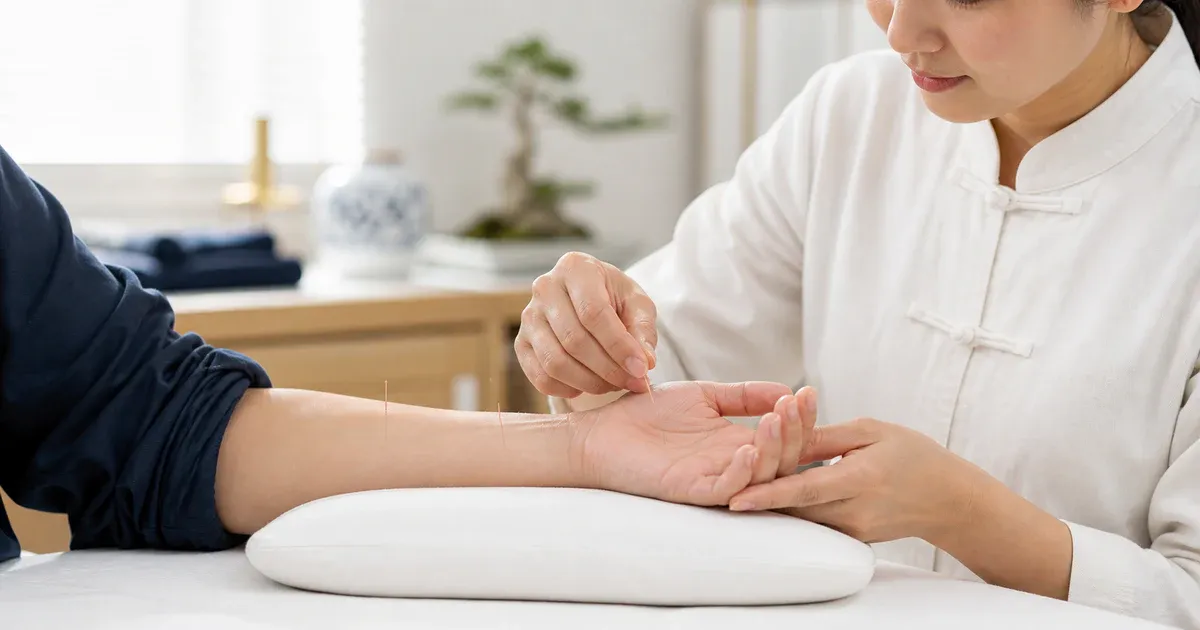
Acupuncture may be considered as adjunctive care to help some patients manage pain, stiffness, and hand function. Responses and suitable treatment frequency vary with the condition and the individual. Acupuncture does not mechanically release the tendon sheath and should not replace an injection or surgical release when a medical clinician determines that such treatment is indicated.
Helpful home and workplace changes can include reducing forceful gripping, limiting repeated squeezing or tool use, alternating tasks, and taking regular hand breaks. Larger or padded handles may reduce the effort required for some activities. Avoid forcibly straightening a locked, painful finger, and seek professional guidance before starting exercises or using a splint.
Prompt medical assessment is important if the finger becomes red, hot, or markedly swollen, especially with fever, or if symptoms follow an injury. Deformity, numbness, weakness, color changes, or a finger that remains fixed also require evaluation. Persistent or worsening symptoms that significantly affect hand use may warrant referral for further treatment.