

Plantar fasciitis commonly causes pain beneath the heel or along the arch. It is often most noticeable with the first steps in the morning, after sitting for a long time, or when walking again after rest. The discomfort may ease after moving around but return following prolonged standing, walking, or exercise.
From a conventional medical perspective, the condition is usually associated with repeated loading and changes in the plantar fascia, the band of tissue connecting the heel to the forefoot. Despite the term fasciitis, persistent cases may involve tissue degeneration as well as irritation. Contributing factors can include a rapid increase in activity, unsupportive footwear, tight calf muscles, and extended standing on hard surfaces.
Before recommending treatment, a TCM practitioner may review the symptom pattern, examine the painful area, and assess tension around the calf, ankle, and foot. Within the traditional framework, heel pain may be interpreted in relation to restricted Qi and blood flow or other individual patterns. This assessment does not replace medical evaluation when a bone, nerve, joint, or systemic condition is suspected.
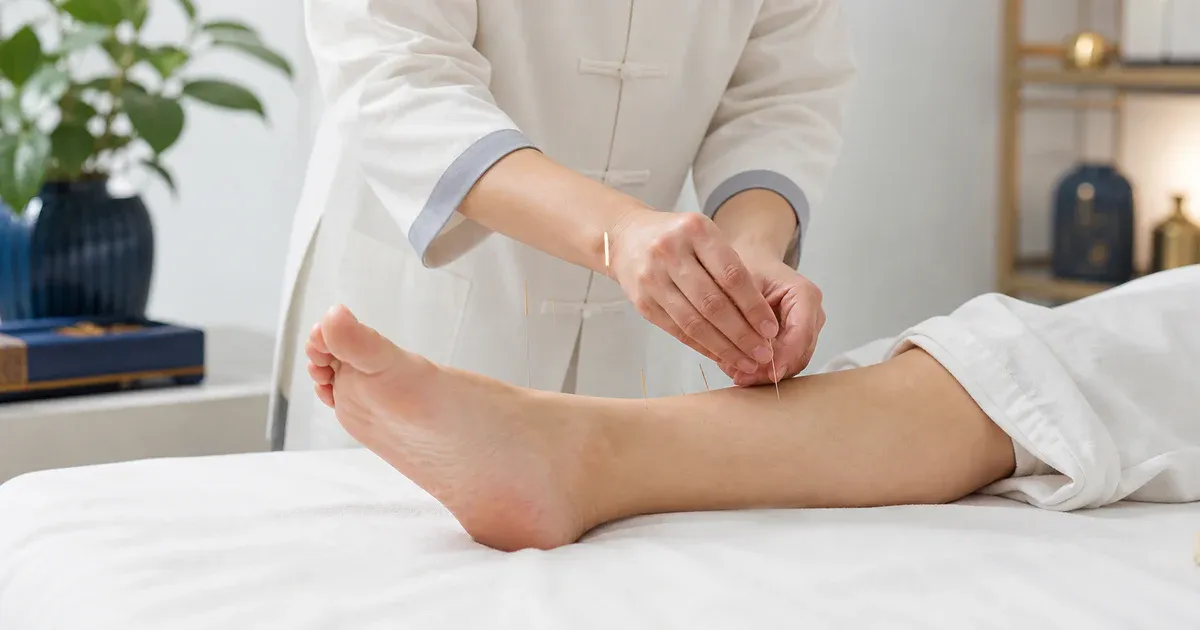
Acupuncture may be considered as individualized adjunctive care to help relieve heel pain and reduce tension in tissues around the lower leg and foot. Some research suggests possible short-term pain reduction, but responses vary and the evidence does not support guaranteed outcomes. It is best combined with appropriate load management, stretching, and other recommended care rather than used as a substitute for diagnosis.
Practical self-care includes temporarily reducing high-impact activity, returning to walking or running gradually, and gently stretching the calf and plantar fascia. Well-fitting shoes with suitable support may help, while walking barefoot on hard floors can aggravate symptoms. Stop any exercise that clearly increases pain and seek professional guidance if you are unsure how to progress.
Seek prompt medical care if heel pain follows an injury, prevents weight-bearing, or occurs with marked swelling, redness, warmth, fever, a wound, numbness, or weakness. People with diabetes or circulation problems should be especially cautious. Persistent or worsening symptoms should be assessed to exclude a stress fracture, nerve compression, inflammatory disease, or another cause of heel pain.