

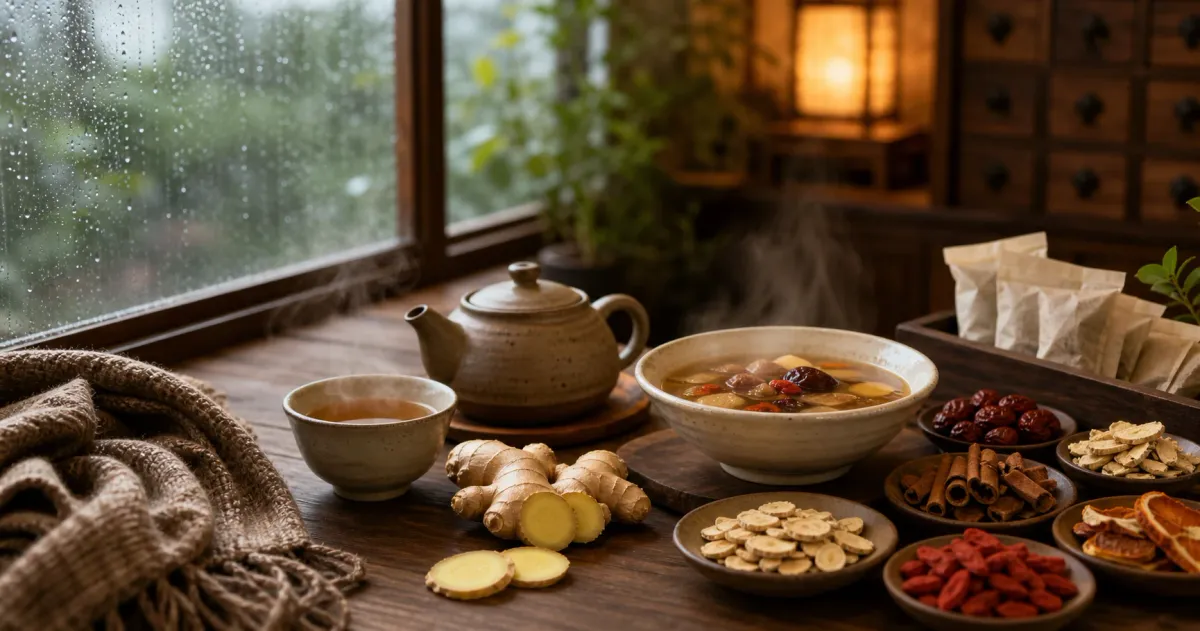
In Traditional Chinese Medicine, the rainy season brings an excess of external dampness (外湿) that can invade the body and impair the Spleen and Stomach organ systems. This accumulation often shows up as heavy limbs, persistent fatigue, bloating, loose stools, or aching joints. Simple daily habits like changing out of wet clothes immediately, drying your hair before bed, and avoiding damp environments can significantly reduce your exposure to this seasonal pathogenic factor.
Diet is one of the most effective tools for combating dampness in TCM. Warm, cooked foods that support the Spleen — such as ginger, turmeric, Job's tears (薏苡仁, a type of grain), and adzuki beans — may help the body transform and eliminate accumulated moisture. Cold drinks, raw foods, and iced beverages should be minimized during the rainy season, as they can weaken Spleen function and allow dampness to build up more easily over time.
Several herbs used in Traditional Chinese Medicine are known for their dampness-resolving properties: fresh ginger (生姜) warms the interior and moves Qi, Poria (茯苓) drains dampness via urination and calms the mind, and dried tangerine peel (陈皮) harmonizes the Spleen and aids digestion. Because herbal formulas must be tailored to each person's individual constitution and symptoms, experienced TCM physicians can recommend the most suitable combination for your specific needs.
Cupping therapy (拔罐) and moxibustion (艾灸) are two clinic-based TCM treatments that practitioners may use to address dampness-related complaints during the rainy season. Cupping stimulates circulation and is thought to draw stagnation and accumulated dampness from the superficial layers of the body, while moxibustion uses the warming properties of the herb mugwort (艾草) to tonify Yang energy and dispel cold-dampness from specific acupoints. Many patients report feeling noticeably lighter and more energized following these treatments.
Staying physically active is an important part of rainy season health in TCM, as regular movement promotes the smooth flow of Qi and Blood, preventing dampness from stagnating in the muscles and joints. Gentle activities such as Tai Chi, yoga, or a 30-minute brisk walk indoors are well-suited to this season. Avoid exercising to the point of heavy sweating, however, as TCM considers excessive perspiration to be depleting to the body's vital energy, especially in already-humid conditions.
Lifestyle
TCM Rainy Season Health: 5 Ways to Fight Dampness
4 min read
In TCM, rainy season brings "dampness" (湿邪) that can cause fatigue, joint pain, and digestive issues. Discover 5 practical tips to protect your body and maintain balance during wet weather.