

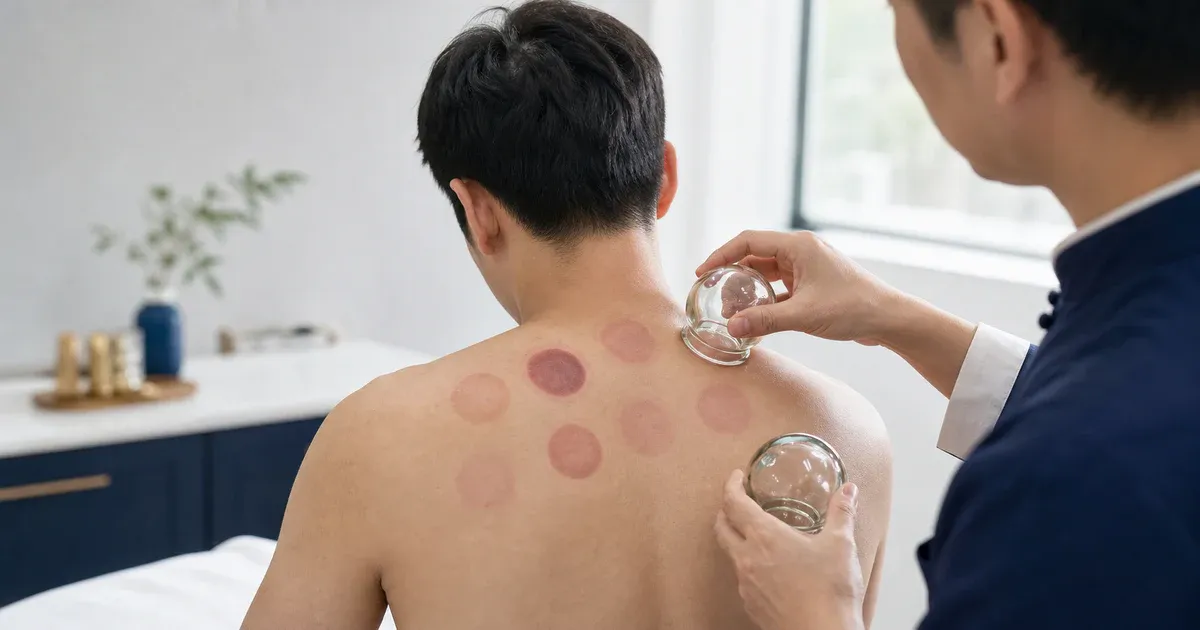
Cupping marks develop when suction lifts the skin and superficial tissue, causing small blood vessels near the surface to widen. A small amount of blood may also leak from capillaries into the surrounding tissue, producing pink, red, or purple circles that resemble bruises. This is a physical response to suction, not evidence that toxins have been pulled from the body.
Mark color can vary with the strength and duration of suction, the treated area, skin thickness and sensitivity, local circulation, age, and medicines or health conditions that increase bruising. A mark may initially become slightly darker before changing color and fading as the body naturally clears the small amount of blood beneath the skin.
Lighter cupping marks may fade within a few days, while darker marks can take approximately one to two weeks. Healing time varies between individuals, so this range is not a promise that every mark will disappear by a particular day. The skin and previous marks should be allowed to recover before the same area is cupped again.
Claims that a dark cupping mark definitively identifies toxins, an unhealthy organ, or a specific disease are not supported by sufficient evidence. Color alone cannot diagnose a medical condition. Pain, numbness, weakness, or other concerning symptoms should be assessed by a licensed healthcare professional rather than interpreted from the appearance of a mark.
After cupping, keep the area clean and dry and avoid scratching, scrubbing, vigorous massage, or intense heat while the skin remains sensitive. Wear clothing that does not rub against the marks and avoid cupping the same site again until it has recovered. Tell the practitioner beforehand if you bruise easily or take medicines that affect blood clotting.
Seek medical advice if pain or swelling worsens, redness or warmth spreads, or you develop pus, fever, bleeding, large blisters, numbness, unusual skin discoloration, or marks that show little improvement after about two weeks. People with bleeding disorders, those taking anticoagulants, or anyone with broken or infected skin should consult an appropriate professional before receiving cupping therapy.